
My relationship with 528 Hz started from a very specific kind of low.
I was working a full-time job and running toward burnout at full speed. My mind wouldn’t stop – tasks, deadlines, too many things at once, none of them fully done. Sleep started breaking down. I could feel the whole thing beginning to unravel.
That’s when I found healing frequencies for the first time.
Not 528 Hz specifically – brainwave entrainment. Binaural beats. Isochronic tones. The idea that sound could actually shift a mental state. I started experimenting, producing my own tracks, listening to what others had made. And then I learned something that changed the direction of my research: every brainwave entrainment frequency needs a carrier frequency underneath it. That’s what leads you into the Solfeggio system. That’s what leads you to 528 Hz.
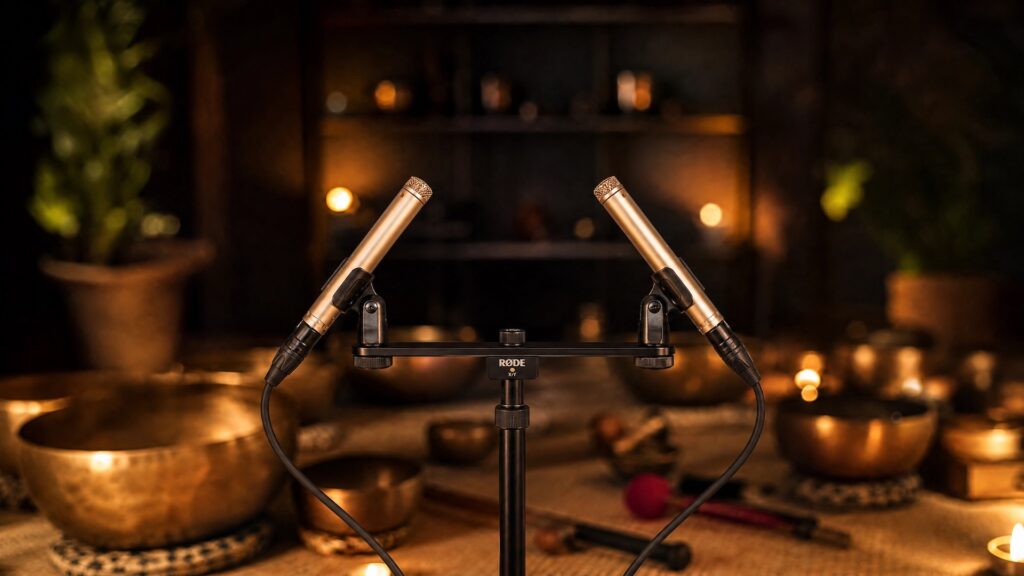
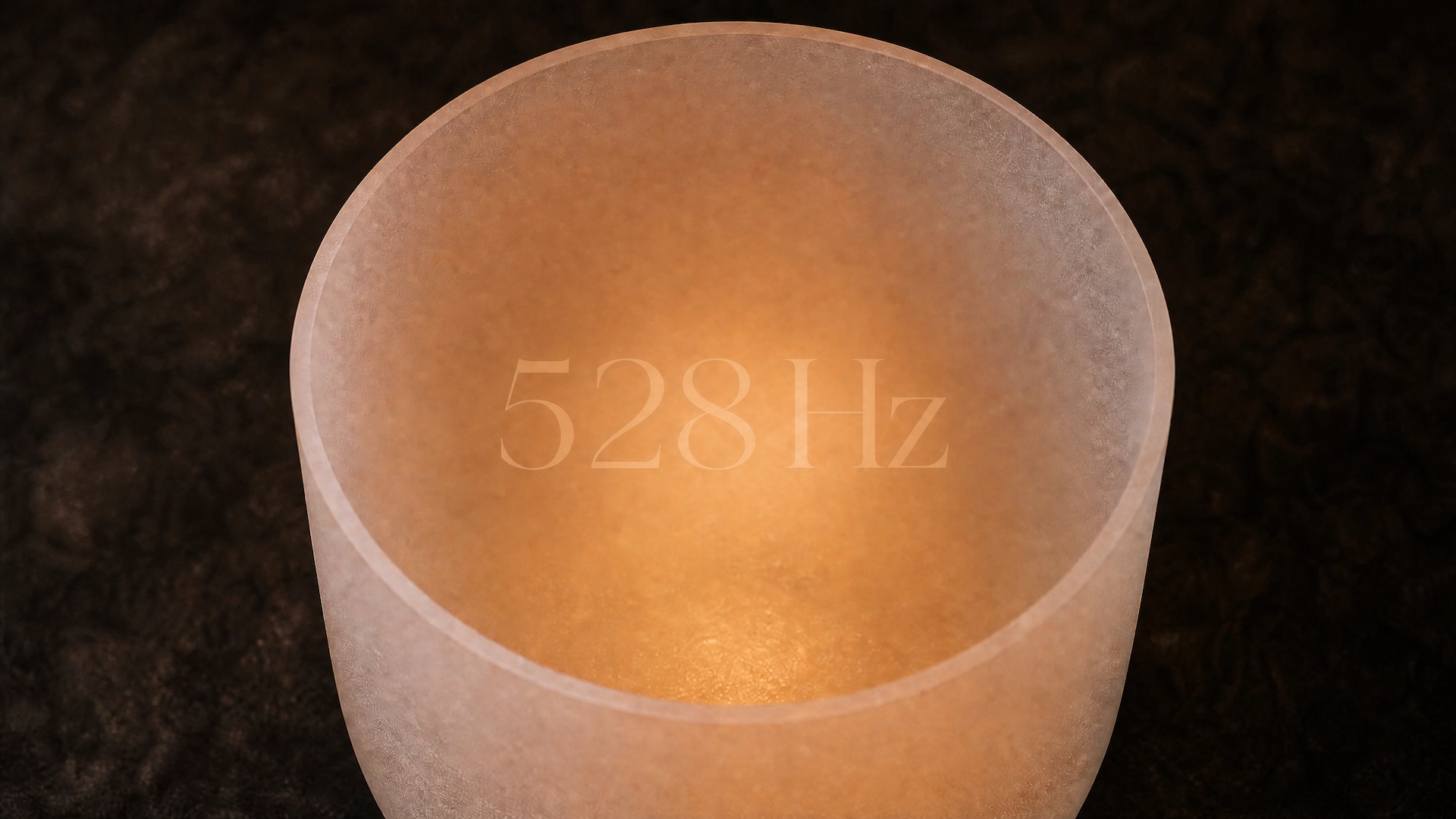
What I found there surprised me. Gregorian monks had worked with these frequencies – before modern marketing, before YouTube, before any of this. The Solfeggio scale maps onto the chakra system across multiple independent traditions. Studies were pointing toward relaxing effects at the cellular level. I started producing music with it, got singing bowls tuned to this frequency, brought it into sound healing sessions.
That’s my background. Not a true believer. Not a debunker. Someone who has spent years working with these frequencies and paying close attention to what actually happens.
Why people ask this question
If you’re searching “is 528 Hz dangerous,” you’ve probably already run into the problem yourself.
YouTube has millions of videos claiming this frequency heals everything. Skeptics say the entire Solfeggio system is invented. You read one forum post and then a contradictory one. Everyone sounds certain. Nobody agrees.
The information landscape around healing frequencies is a mess. A lot of the people making the loudest claims haven’t done any real research. The studies that do exist are sparse and scattered. And nobody answers the practical questions – how much is too much? Headphones or speakers? What happens when you combine it with binaural beats? What level should it be played at?
That gap is real. And it creates a reasonable uncertainty in people who actually want to use sound healing thoughtfully.
What the science says – honestly
There is research. Less than the content online would suggest.
A handful of studies have looked at 528 Hz – measuring cortisol, oxytocin, anxiety levels, cell resilience under stress. The results are consistently interesting. They point in the same direction. But the samples are small, some journals have credibility issues, and none of it comes close to the kind of evidence that would satisfy a clinical standard. If you want a full breakdown of what each study actually found and where its limitations are, I’ve gone through all of them in detail here.
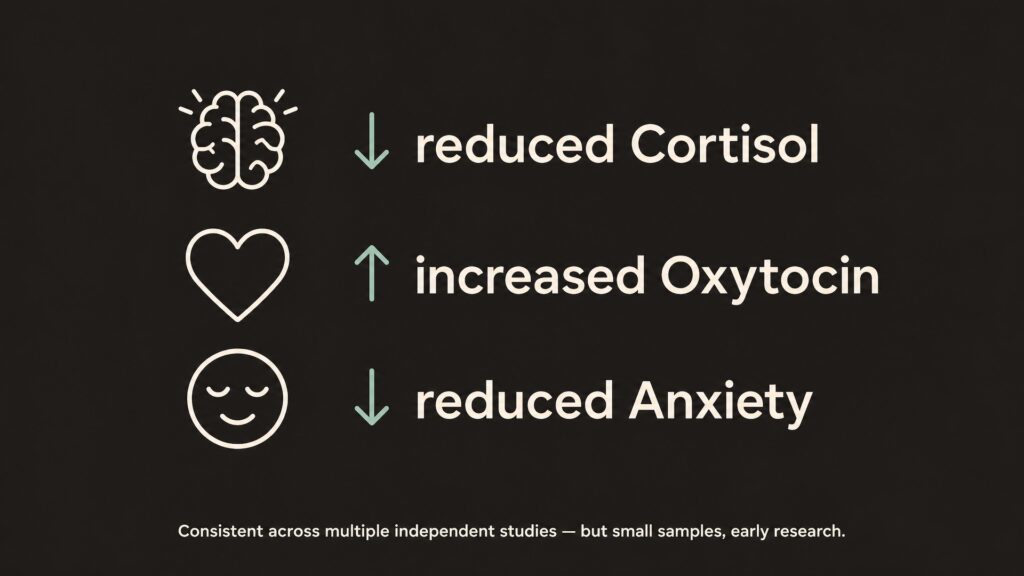
The honest picture: this is a growing area of research, not an established one. The indications are there. The proof is not.
There’s also a larger context worth understanding. Frequency medicine has not been well-funded as a research area. This is not an accident. The medical and pharmaceutical industry is where the research money flows. What doesn’t serve that system tends not to get funded. Nikola Tesla ran into this directly – the institutional resistance he faced when exploring energy and frequency was real and documented. That history explains part of why the evidence base is thinner than it should be by now.
Thin evidence is not the same as no evidence. And no evidence is not the same as evidence of harm.
The DNA repair claim
Let’s be direct: “528 Hz repairs your DNA” is marketing.
It sounds exactly like what people who already believe in sound healing want to hear – finally, the science on our side. But the evidence for that specific claim, that this frequency actively repairs human DNA, does not exist in the form those social media posts suggest.
That doesn’t mean sound has no effect on the body at a cellular level. If the universe is fundamentally vibrational – which is increasingly what physics points toward – then it would be strange if sound had no effect at the molecular level. DNA is not static matter. It responds to its environment.
But “it would be strange if it had no effect” is not the same as “we have proven it repairs DNA.”
The ancient sources are worth noting. Gregorian monks worked with these frequencies before any modern marketing existed. The resonances between Solfeggio frequencies and chakra systems appear across completely independent traditions. These convergences are not nothing – but they are also not clinical proof. We can hold both things at once: this is interesting, and we need more research.
Can it actually harm you?
Not inherently. I don’t believe 528 Hz is dangerous as a frequency.
The scenarios where it becomes a problem are the same scenarios that apply to almost any sound.
Volume. Too loud, for too long, causes hearing fatigue and damage. That applies to every frequency – it’s physics, not something specific to 528 Hz.
Wrong context for brainwave entrainment. When 528 Hz is used as a carrier frequency for binaural beats, the brainwave target matters. Gamma frequencies for alertness. Alpha and theta for relaxation and deep rest. Listening to a gamma entrainment track when your body needs to rest is actively unhelpful – and that mismatch is something most people never think about when they press play on a “healing frequency” video.
Intention. This one is harder to measure, but I think it matters most. A frequency is not healing by itself. It becomes a healing tool when it was created with genuine care for the person receiving it. The cymatics experiments are worth knowing here – the Chladni plate experiments, where sand forms geometric patterns in response to sound, show that frequency organizes matter. What that organization looks like depends on more than just the number.
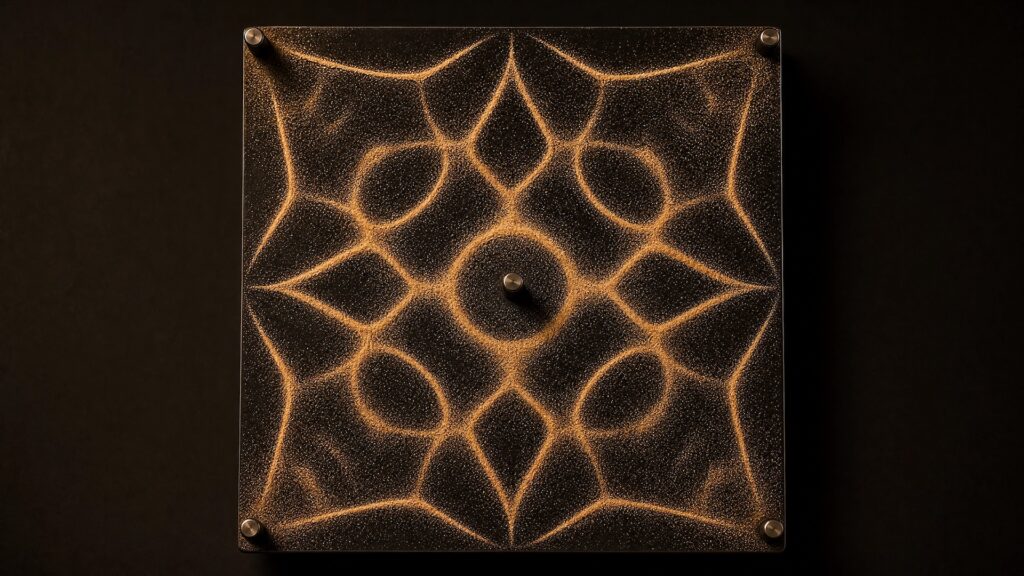
One more thing worth saying: 440 Hz is called the “evil frequency” in a lot of online content. Studies have actually found that frequency to be beneficial too. Much of what circulates about specific frequencies being inherently harmful is not grounded in evidence. What determines harm is almost never the frequency itself – it’s how, when, at what volume, and with what intention it’s being used.
The two camps – and where I actually stand
Skeptics say: Solfeggio frequencies are pseudoscience, the numbers were invented in the 1990s, there is no mechanism.
True believers say: 528 Hz heals everything, it’s the love frequency, the science proves it.
I’m not in either camp.
I’m a producer and a sound healer. These frequencies are tools. When I work with a client who is drawn to this frequency – when something in their body is pulling toward it – I work with it. When something else fits better, I use that. I don’t put 528 Hz on a pedestal. I also don’t dismiss it.
The evidence we have suggests potential. The ancient sources point toward something real. The lack of robust scientific proof has context – this hasn’t been a research priority, for institutional reasons that are worth being aware of.
My honest position: there is enough pointing toward possible benefit, and essentially no evidence of harm, that this is worth exploring with appropriate discernment.
What I see in sessions
In my own practice, the feedback is consistently positive. Every session is guided by a healing and loving intention – and that context shapes everything.
But here’s what I’ve also noticed: it is never only about the frequency. The environment matters. How people are guided through a session matters. How the music was produced, how the frequency is embedded in the sound, what state the person arrives in – all of it goes into the result.
The variable that surprises people the most: openness.
People who are skeptical – who come in closed, waiting to be proven wrong – usually don’t receive the same effects as people who come in genuinely open. Not because the frequency works differently on them, but because healing happens in the mind. It happens when someone truly believes they can shift, grow, become a different version of themselves. That belief is not naivety. It’s the actual mechanism. The sound creates the space. The person’s openness determines whether they step into it.
When the setting is right, the intention is clear, and the person is ready – the feedback is always positive. That’s what I’ve seen, consistently.
What matters more than the frequency
Here’s what I’ve come to after years of working with this: the frequency number is rarely the most important variable.
What I can actually feel – what I believe shifts the outcome most – is the intention behind what was created. Was this music made from genuine care for the person listening? Or was it made to rank on an algorithm?
You can feel the difference. Even if you can’t explain why.
When I choose what to listen to, that’s what I’m paying attention to – not the number. Was this person creating from love, from service, from an open heart? That quality travels through the sound. The frequency creates the container. The intention determines what fills it.
That’s the most practical thing I can offer you about 528 Hz: use it as a tool, stay close to what your body actually does when you listen, and trust that more than any claim you read online.
If the science doesn’t confirm it – but you felt it work
This comes up a lot. Someone has listened to 528 Hz for months, genuinely felt a shift, and then reads that the scientific evidence is inconclusive. What do you do with that?
Here’s what I’d say: music is therapeutic, regardless of the specific frequency. When you take time to be still, to receive sound, to let the mind slow down – real things happen in the body. The nervous system settles. That settling is often where the actual healing takes place. Whether 528 Hz is the mechanism or the anchor for that process, we don’t fully know yet.
What we do know: healing looks different for every person. It’s difficult to study in a controlled trial because the variables are too many and the individual differences too wide. Science in this area is slow – not because the effects aren’t real, but because the research tools available aren’t well matched to what we’re actually measuring.
If it helped you – that’s real. Keep going. Share it with people who might need it.
A few practical things
If you’re working with 528 Hz – or any healing frequency – a few things are worth knowing.
Listen with headphones where possible. The stereo separation and proximity to your ears makes a meaningful difference in how the frequency is received.
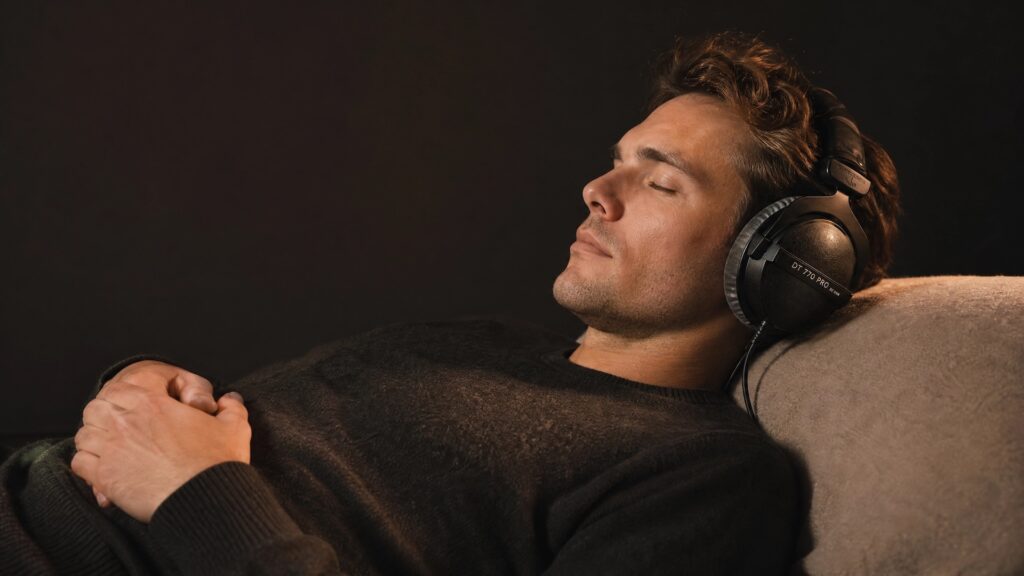
Don’t listen while driving or operating machinery. This applies especially to music combined with brainwave entrainment. The altered states that make healing music effective are not compatible with needing to react quickly. PLEASE do not listen in the car.
Pay attention to the brainwave layer. If the music includes binaural beats or isochronic tones, look at what state it’s designed for. Theta and alpha are for relaxation and healing. Delta for deep rest. Gamma for alertness. Match the intention of the music to the state you actually want to be in.
Start shorter and notice how you feel afterward. More is not always more with sound healing. Shorter, conscious sessions are often more effective than long passive background listening.
Important: none of this is medical advice. If you have any medical condition, consult a professional before working with brainwave entrainment frequencies.
If you’re about to listen for the first time
The question “is it safe?” is really asking: can I trust this?
Here’s the honest answer: when the setting is right, the volume is reasonable, the music was created from a positive place, and your body feels good – it’s safe. There’s nothing inherently dangerous about this frequency. The general rules of good listening apply. Not too loud. Not while driving. That’s it.
More importantly: check in with your body. If it says yes – if something in you relaxes, opens, wants to keep listening – that’s your answer. If it feels off, if something tightens or agitates rather than settles – that’s information too. You don’t need to push through. Not every frequency is right for every person at every moment.
And if one track or one artist doesn’t land, don’t conclude the frequency doesn’t work for you. Try different formats. A different producer. Singing bowls tuned to 528 Hz. Handpan recordings. There are many ways to experience this frequency – find the one your body actually responds to.
Always take responsibility for your own wellbeing and safety. Nothing here is medical advice. What I’m offering is a starting point for your own exploration.
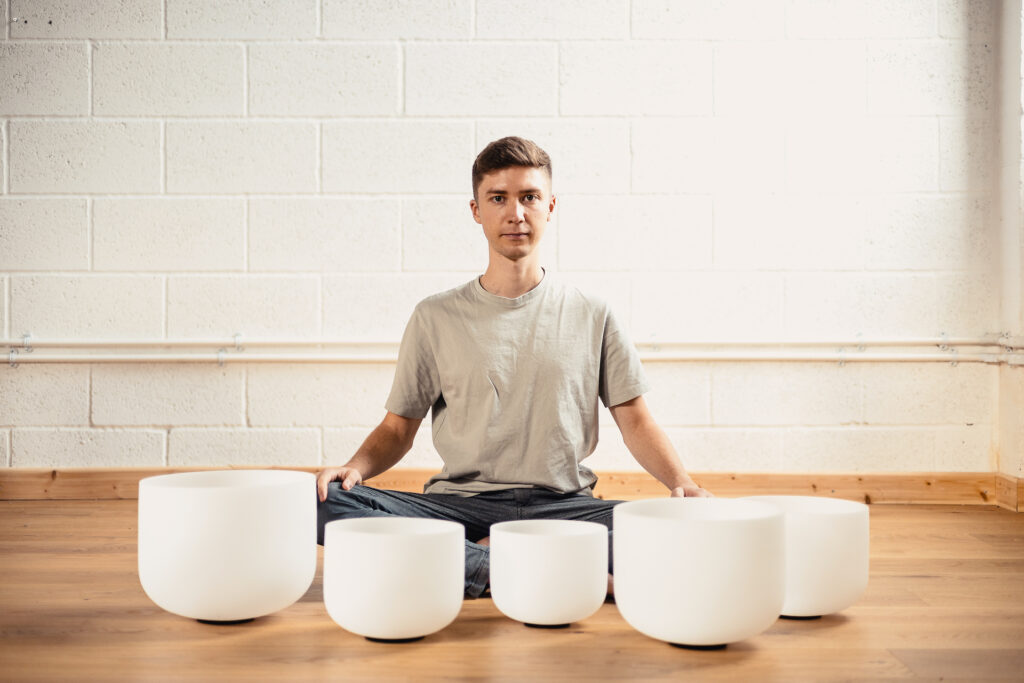
Try it. Feel for yourself. That’s the only real answer.